
Energy is not separate from leadership. It is the source of it. You cannot lead from a constantly depleted body or mind. While we often focus on managing our time, it is our energy that determines the quality of our thinking, our decisions, and our ability to show up consistently for others.
The Energy Compass is designed to help you reflect on how you are currently channeling your reserves. Looking at your work through the lenses of meaning and energy offers a simple way to understand which activities fuel you, which ones drain you, and where your attention is creating the greatest impact. This is a snapshot, not a fixed profile, and it is worth revisiting every time there is a change in the rhythm of your work.
The tool comprises a series of reflection questions that help you map the extent to which you operate in each quadrant, along with practical suggestions for what you can do to shift, if needed. The goal is not to judge how you spend your time, but to build greater awareness so you can make more intentional choices about where your energy goes.
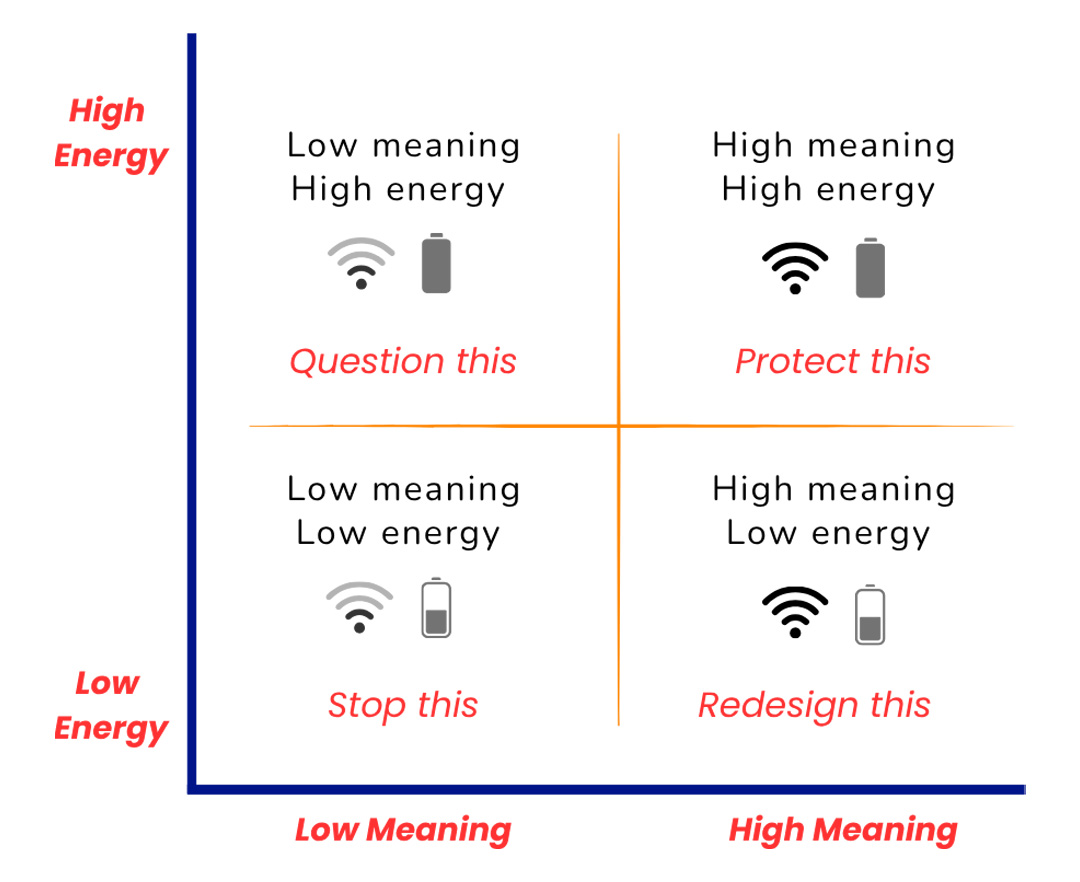
Quadrant 1: Low Meaning, High Energy
This is the quadrant where distraction can disguise itself as contribution. The work often feels engaging and productive, making it easy to confuse activity with impact. You may find yourself polishing presentation decks endlessly, responding to every interesting opportunity, solving problems that others could solve themselves, or becoming unnecessarily over-involved. These activities can feel rewarding in the moment, but they may not contribute enough to your most important priorities.
Ask yourself:
- What feels good in the moment, but may not matter enough?
- What do I return to because it feels satisfying, not because it is strategic?
Question this. Notice your patterns, enjoy the parts you want to keep, and delegate the ones you don’t.
Quadrant 2: Low Meaning, Low Energy
This is the quadrant in which burnout often hides. Legacy work and unnecessary busy work fill this danger zone, quietly taking up time and energy without creating meaningful value. Because these tasks become routine, they often continue unquestioned. Over time, they reduce the space available for work that truly matters.
Examples include repetitive approvals and administrative follow-ups, unclear meetings, unnecessary reporting, and preventable fire-fighting.
Ask yourself:
- What do I quietly resent every day?
- Am I doing this because it matters, or because I have always done this?
Stop this. Reduce this work, remove it entirely where possible, and reclaim this energy.
Quadrant 3: High Meaning, Low Energy
This quadrant is made up of necessary but exhausting work. These responsibilities matter, but they often demand emotional, mental, or relational effort that leaves you feeling drained. The challenge is not the importance of the work. It is finding better ways to sustain it.
Examples include difficult feedback conversations, conflict resolution, high-stakes decisions, and stakeholder management.
Ask yourself:
- Where do I feel responsible, but the work costs more than it should?
- What important work consistently drains me?
Redesign this. This work needs better support, not avoidance. Better preparation, stronger systems, and shared responsibility can make important work more sustainable.
Quadrant 4: High Meaning, High Energy
This is where leaders do their best work. Activities in this quadrant demand energy, but they also supply it. You feel enriched and more alive when you are in this quadrant because the work creates value for others while reinforcing your own sense of purpose. This is where sustained performance and meaningful contribution come together.
Examples include coaching conversations, strategic thinking, facilitation, creative work, and meaningful client interactions.
Ask yourself:
- Where do I feel most useful, alive, and like myself?
- What would I fight to keep even in a difficult time?
Protect this. These are activities that create both impact and energy.
The Energy Compass is not about eliminating every draining task or spending every day in the “right” quadrant. Every role involves a mix of responsibilities, each demanding something different from us. The value of this tool lies in helping you notice where your energy is going, question what no longer serves you, and make more intentional choices about the work you protect, redesign, or let go of. Leadership becomes more sustainable when we manage not just our time, but the energy that makes meaningful work possible.